If you're having trouble viewing this email, you cansee it online.
Founded in 1979, the Louisiana Trust for Historic Preservation advocates, promotes, & preserves historic places representing our diverse culture.
August 2026
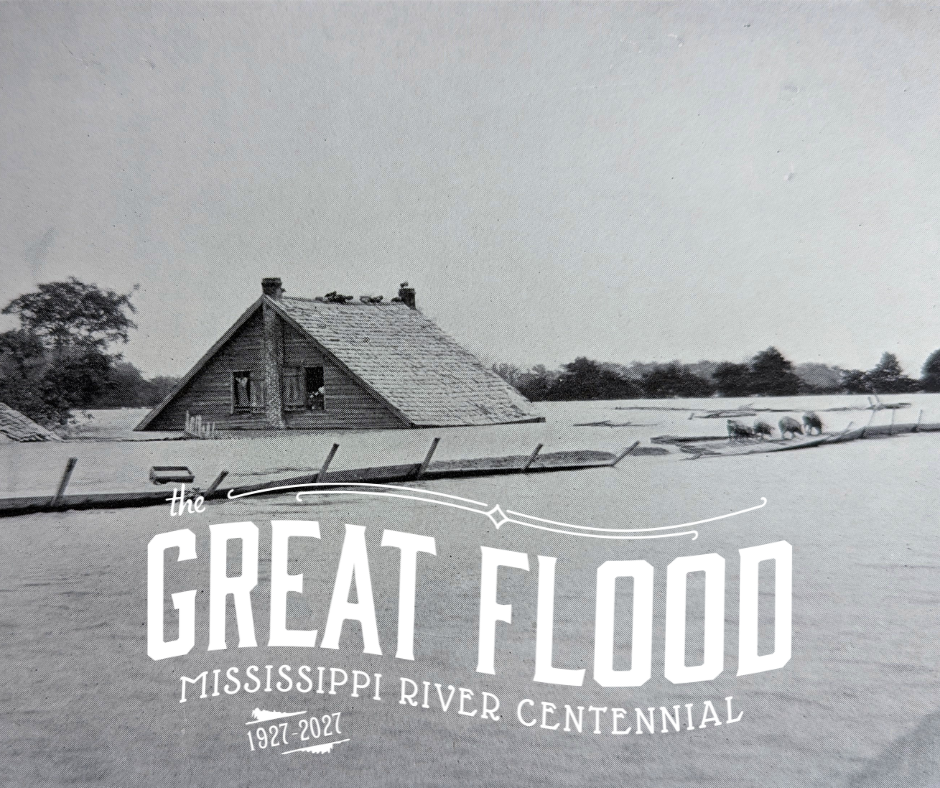
The Great Flood Centennial
The Great Flood Project commemorates the 1927 flood’s history and legacy on the landscape and through a dynamic archive. The Centennial is upon us: it has been one hundred years since the persistent and heavy rain began in August 1926 that would ultimately lead to the overflowing of the Mississippi River and its tributaries, eventually overwhelming the existing levee system(s) across the Mississippi Valley in the spring of 1927.
The Great Flood Project is a broad and collaborative effort across the Mississippi River Valley. We are working with partners, communities, organizations, individuals, scholars, artists, etc. to continue this important work of documenting and preserving the history and legacy of the flood. We ask you to join us in this effort. What opportunities are there to commemorate the 1927 flood in your community? What stories have been passed down in your family and/or town? Do you have photos that you would be willing to share? Perhaps you wish to participate in the historical marker program and invest in a Great Flood marker to tell the stories of how the flood impacted your community, as well as its lasting legacy on the landscape. No effort is too big or too small, and all efforts to commemorate the Centennial will be mapped on the Great Flood Project’s Website as part of its archive. The archive not only helps to preserve and teach this important history but also promotes tourism in these communities by encouraging the public to visit and engage with these sites and places on the map. With your help, we will be telling both local stories and a larger national story of the 1927 flood through these communities who are connected by this history.
Please reach out to 1927flood@lthp.org to let us know how you plan to participate.
Plan and/or create a project, event, program, exhibit, etc.:
Let us know how you are commemorating the Centennial of the Great Flood so that we can map your efforts on the Website's archive and calendar! The calendar will publicly document the efforts of communities, organizations, institutions, and individuals and will allow others to know what events, etc. are happening andwhere they are taking place. At the individual level, you might consider choosing a book to read with friends/family/a book club, creating a piece of art or writing that relates to the flood, the Mississippi River, waterways, memory, etc.
Share stories, photos, etc. from your family and/or community with the archive:
Do you have photos, letters, or other artifacts you would like to share with the project? We will include these on our interactive map.
Be Part of the Commemorative Trail by Investing in and Installing a Great Flood marker:
One of the goals of the Great Flood Project is to create a commemorative trail throughout the Mississippi River Valley, connecting communities across states that were historically impacted by the disaster and preserving the history on the physical landscape. Learn more about the marker here, and be sure to reach out as soon as possible to 1927flood@lthp.org if you have questions or wish to install a marker in your community.
Before the levees broke: Persistent and heavy rain begins to fall across the central part of the United States in 1926
Beginning in late August 1926, persistent and heavy rain fell across the central portion of the United States. Other storms followed. According to John M. Barry’s Rising Tide: The Great Mississippi Flood of 1927 and How it Changed America, “an area covering several hundred thousand square miles received little relief from drenching rain” during the last half of the month. [1] In September, floodwaters inundated parts of Nebraska, Kansas, Iowa, Illinois, and Indiana. [2] Flooding continued into October in not only Nebraska but also South Dakoka and Oklahoma, and Kansas’s Neosha River and the Illinois River rose to unprecedented levels. [3] In late December, a Missouri newspaper reported that the Mississippi River was on a “rampage” due to “continued rainfall in the lower Mississippi Valley and in the watersheds of the Ohio, Tennessee and Cumberland.” [4] The paper noted that “the river” was out of its banks in Kentucky “opposite Cairo [Illinois],” and that the “Ohio [River] is out of its banks,” impacting Evansville, Indiana, as well as Nashville, Tennessee. [5]
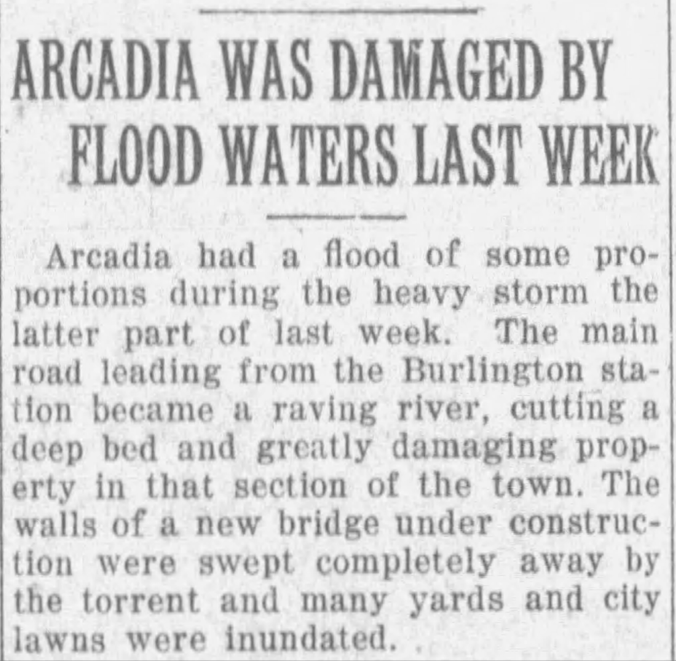
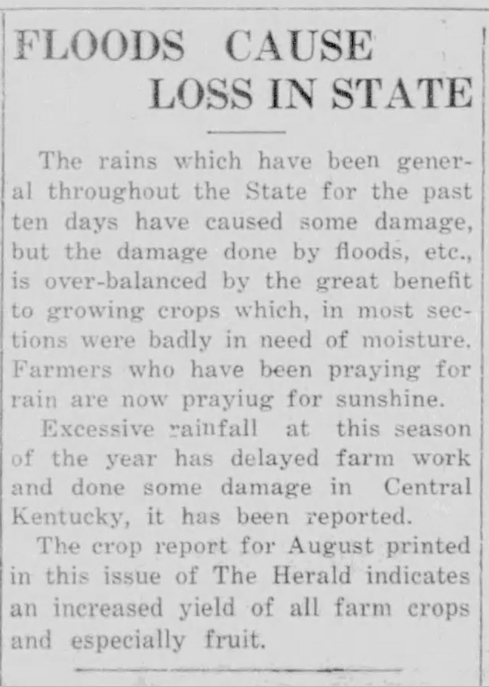
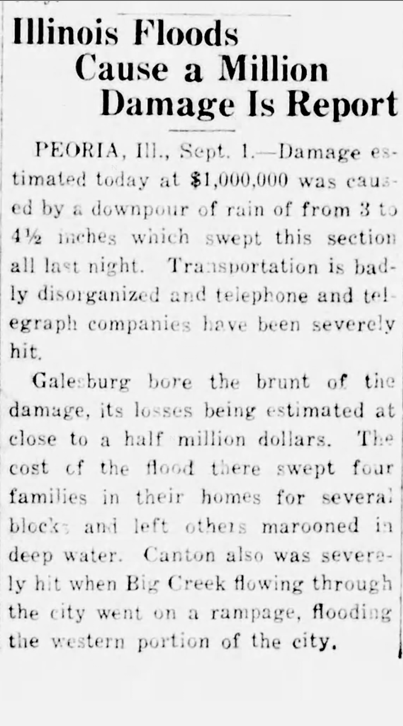
Below are clippings from various states impacted by heavy rains and flooding in the late summer and fall of 1926.
Above: The Custer County Chief (Broken Bow, Nebraska), August 19, 1926, p. 1. (Newspapers.com)
Above: The Paintsville Herald (Paintsville, Kentucky), August 26, 1926, p. 1.
(Newspapers.com)
Above: Jefferson City Tribune (Jefferson City, Missouri), September 1, 1926, p. 1. (Newspapers.com)
[1] John M. Barry, Rising Tide: The Great Mississippi River Flood of 1927 and How It Changed America (Touchstone of Simon & Schuster, 1997), 174.
[2] Barry, Rising Tide, 174.
[3] Ibid., 175.
[4] "Miss. River on a Rampage," The Charleston Times (Charleston, Missouri), December 31, 1926, p. 1.
[5] Ibid.
On this day (August 27, 1926)
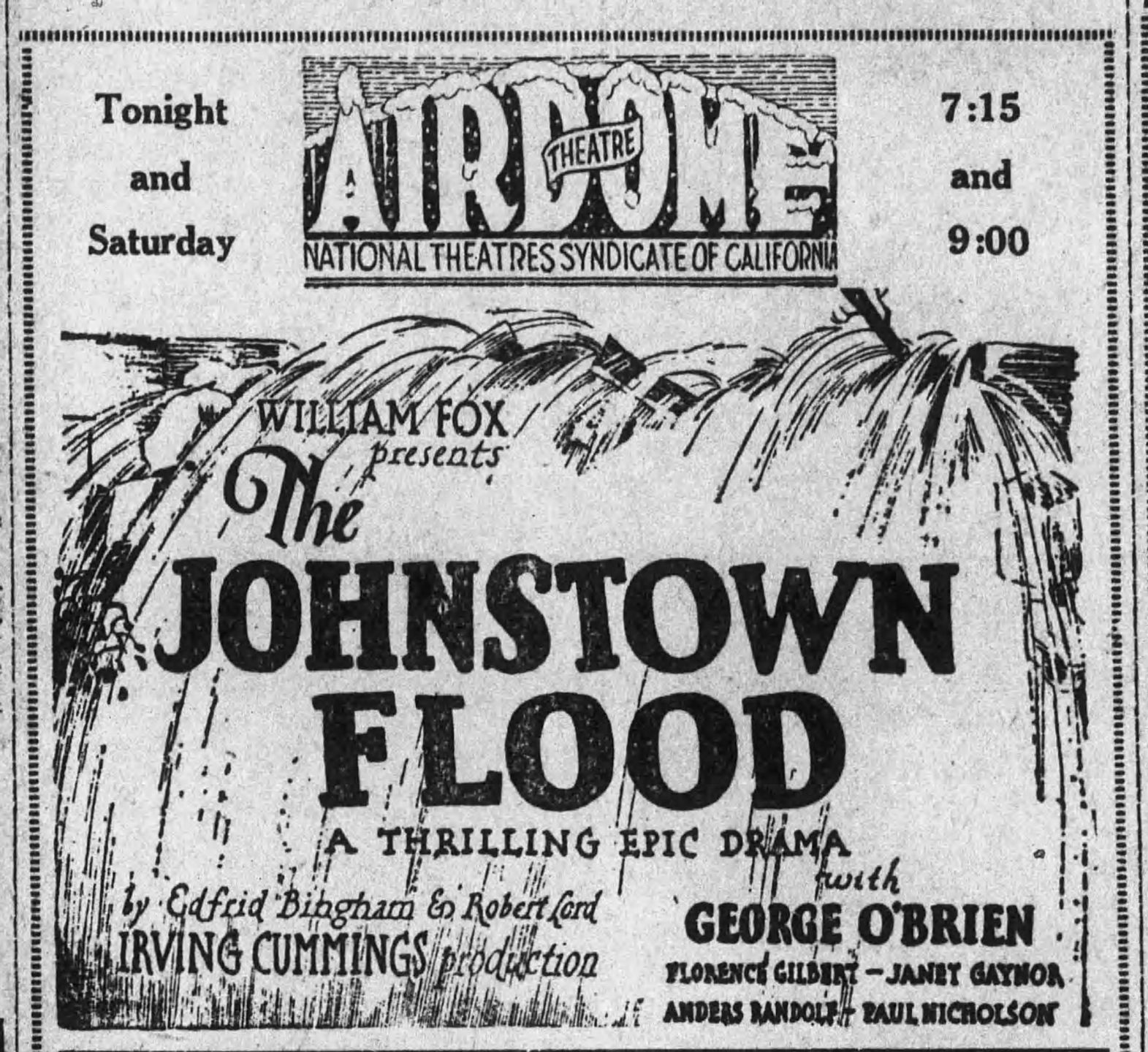
In August 1926, movie theaters across the country were showing The Johnstown Flood, a silent film released a few months prior in February. The movie’s plot takes place during the devastating tragedy that occurred in Johnstown, Pennsylvania, in 1889. Learn more about that flood here.
Above: The Enterprise Record (Chico, California), August 27, 1926, p. 5. (Newspapers.com)
From the Community Archives
The Great Flood Project invites organizations, institutional archives, individuals, etc. to participate in the Centennial by creating and/or sharing resources with the archive. Below are just a few examples (across Arkansas, Mississippi, and Louisiana) that have been shared. Please reach out to 1927flood@lthp.org if you wish to share resources and/or materials related to the 1927 flood.
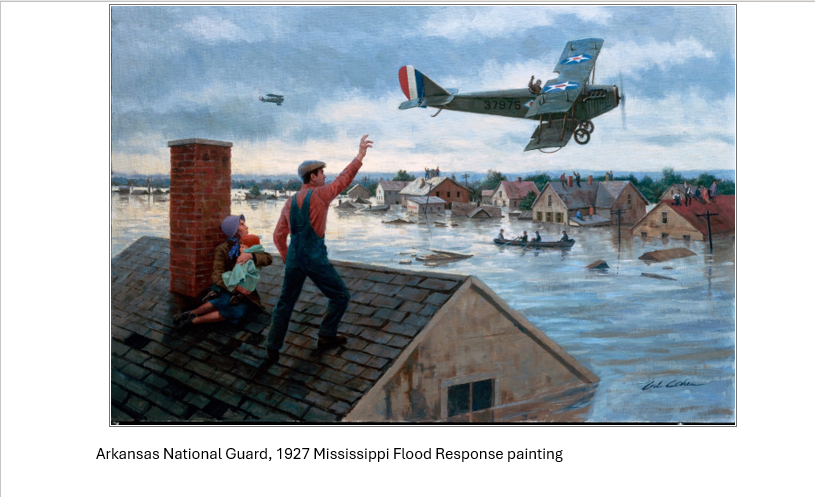
Above: "The Great Flood of 1927," a National Guard Heritage Painting by Gil Cohen, courtesy of the National Guard Bureau. Learn more here.
This photo was provided courtesy of the Arkansas National Guard Museum, Camp J.T. Robinson.
Visit the Arkansas National Guard Museum and learn more here.
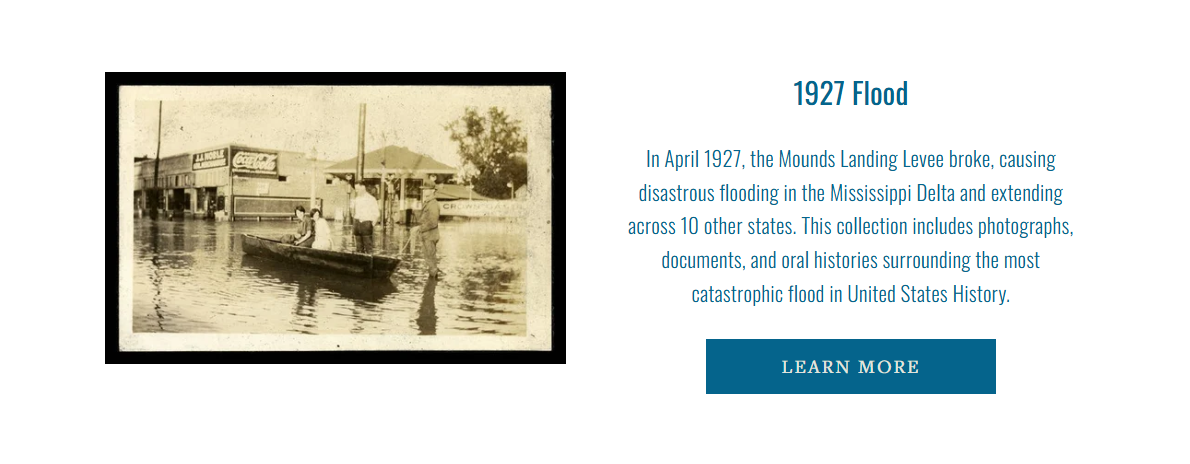
Above: The Mississippi Digital Library created a Research Topic around the 1927 flood and the Mounds Landing Crevasse of April 1927. See the collection here.
Visit the Mississippi Digital Library and explore other collections and resources here.
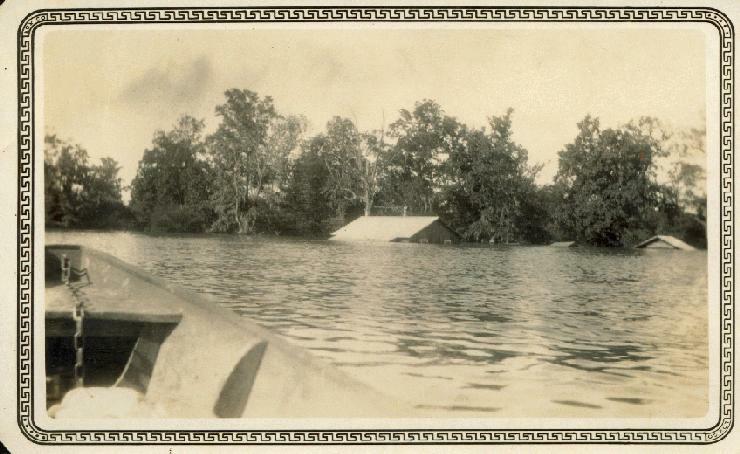
Above: Photo depicting flooding in Columbia, Louisiana (Caldwell Parish), during the 1927 flood. Submitted by Patricia Cook Taylor. See the collection on the Great Flood Website's interactive map here.