If you're having trouble viewing this email, you cansee it online.
Founded in 1979, the Louisiana Trust for Historic Preservation advocates, promotes, & preserves historic places representing our diverse culture.
April 2026
Project Updates
April has been a productive and exciting month, with trips to visit the archives at the Historic Natchez Foundation and then Marianna, Arkansas, for the Arkansas Delta Byways' annual business meeting at the Mississippi River State Park.
The Great Flood Project continues to discuss programming and the historical marker program with communities in the Mississippi River Valley. Please reach out to kmccullum@lthp.org if you wish to schedule a conversation and/or visit to discuss participating in the Great Flood Project! And be sure to follow the LTHP on Facebook and Instagram to stay updated on news, events, and stories throughout the month in between issues of the newsletter.
The 1927 Flood and Red Cross Camps in Monticello and Marianna, Arkansas
The 1927 Flood caused mass devastation and destruction in Arkansas. Floodwaters covered more than 5 million acres, with "thirty-six out of seventy-five Arkansas counties under water up to thirty feet deep in places." [1] Flooding began as early as February when, after months of consecutive rainfall and the rise of the Mississippi River, the White and Little Red Rivers flooded over 100,000 acres, displacing five thousand people from their homes. [2] At the end of March, the levee at Laconia Circle broke, followed by various levee breaches throughout the month of April, including the levee at Pendleton in Desha County. Then, on April 29, the levee at South Bend broke, becoming the last "major" levee breach in the state.
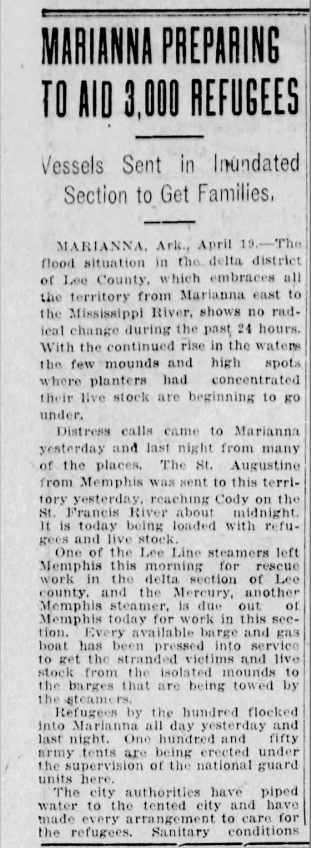
Over 350,000 people in Arkansas were impacted by the 1927 Flood, and the state hosted 80 of the 154 Red Cross relief camps that dotted the Mississippi River Valley. [3] Monticello in Drew County became a refuge for thousands of people fleeing the water caused by the Pendleton Crevasse. Meanwhile, Red Cross officials praised the town of Marianna (Lee County) for its excellence in organizing relief work. [4] According to one newspaper, citizens representing the "Red Cross, the Business Men's Club, the national guard and the city and county administrations" created committees to address various relief work activities. [5] The national guard supervised the construction of 150 tents with the expectation that Marianna would welcome thousands of refugees. [6]
[2] John M. Barry, Rising Tide: The Great Mississippi Flood of 1927 and How it Changed America (Simon & Schuster, 1998), 182.
[3] "Flood of 1927," Encyclopedia of Arkansas.
[4] "Marianna Civitans Caring for Refugees," The Commercial Appeal (Memphis, Tennessee), April 24, 1927, p. 5.
[5] "Marianna Preparing to Aid 3,000 Refugees," The Commercial Appeal (Memphis, Tennessee), April 20, 1927, p. 3.
[6] Ibid.
Above: Clipping from"Marianna Preparing to Aid 3,000 Refugees," The Commercial Appeal (Memphis, Tennessee), April 20, 1927, p. 3.
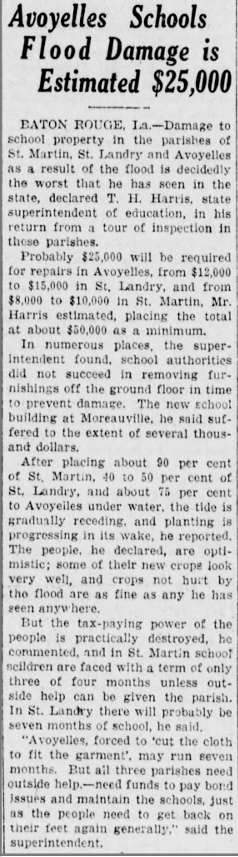
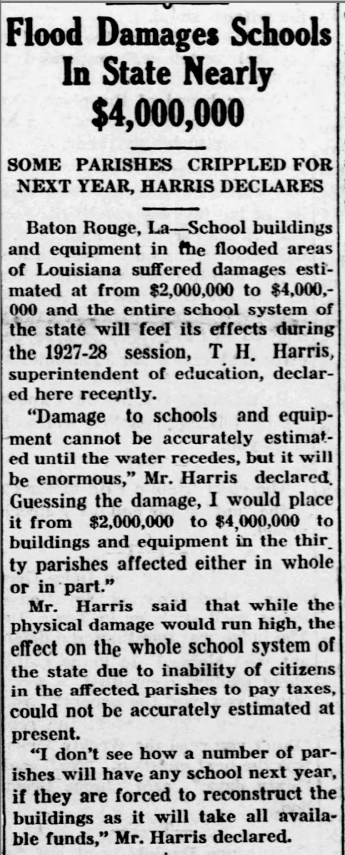
From the News: Avoyelles Parish (Louisiana) and the Impact of the 1927 Flood on School Infrastructure in LA
Left: "Avoyelles Schools Flood Damage is Estimated $25,000," Weekly Town Talk (Alexandria, Louisiana), July 16, 1927, p. 9.
Right: "Flood Damages Schools in State Nearly $4,000,000," The Marksville Weekly News (Marksville, Louisiana), June 11, 1927, p. 1.
Oral Histories of the 1927 Flood:
Segment from BackStory Podcast
In June 2013, the BackStorypodcast released an episode titled, "That Lawless Stream," about the history of the Mississippi River. One segment, "Remembering the Rising Tide," features a conversation with Jennifer A. Cramer, Director of the T. Harry Williams Center for Oral History at LSU, who shares clips of stories from the 1927 Flood in Louisiana as remembered through oral histories. This segment references the Caernarvon Crevasse.
Listen to (and find the full transcript for) the segment here.
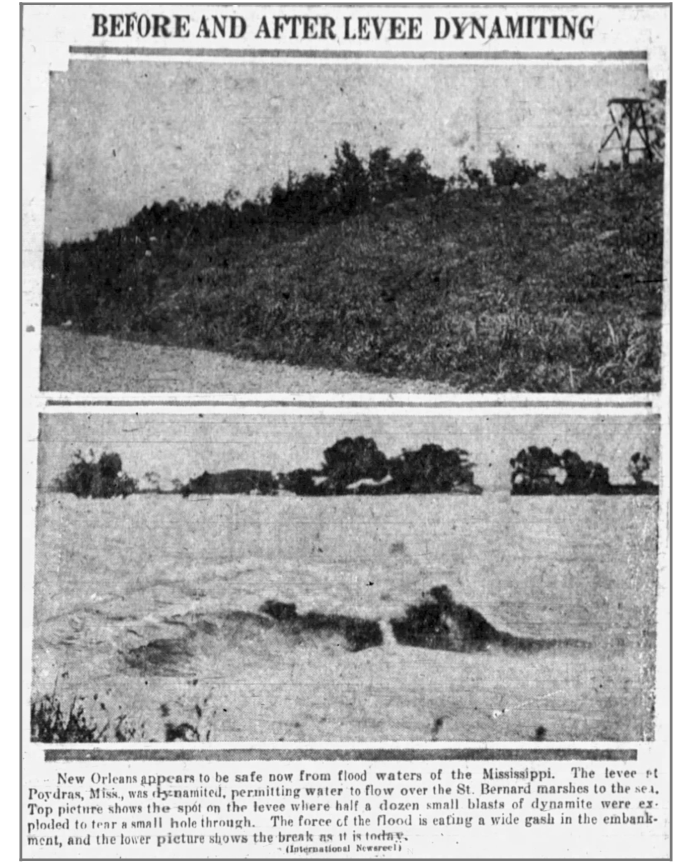
Above: The Daily Sentinel (Grand Junction, Colorado), May 4, 1927, p. 1.
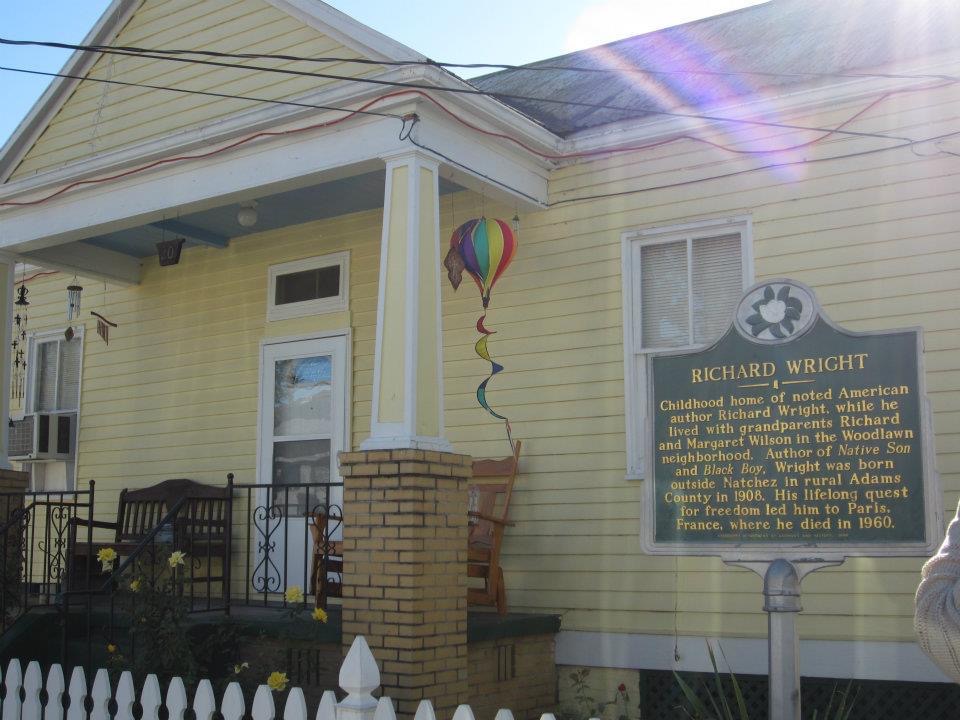
Historic Sites Related to Literature and the 1927 Flood: Richard Wright's Grandmother's House (Natchez, Mississippi)
Above: Older photo taken by Project Manager on a visit to Natchez. For more information, see Visit Natchez here.
Following the Great Flood, Richard Wright wrote "Down by the Riverside" and "The Man Who Saw the Flood." Learn more by revisiting the November 2025 newsletter.
Get Involved with the Great Flood Project: Invest in a Historical Marker
Are you interested in investing in a historical marker that shares the stories of the 1927 flood in your community? Here are a few things to keep in mind when considering costs and timeline if planning for installation by spring/summer 2027:
the cost of the marker is $10,000 and communities/organizations can fundraise or seek grant funding to help with the cost
determine where the marker will be located and what the depth of floodwaters was (if applicable) at that location
work with local historians and community members to determine what stories will be told on the marker
the timeline for fabrication and production to installation is approximately 3 months
Please reach out to kmccullum@lthp.org for more information. Learn more about the marker and trail here.