If you're having trouble viewing this email, you cansee it online.
Founded in 1979, the Louisiana Trust for Historic Preservation advocates, promotes, & preserves historic places representing our diverse culture.
March 2026
Project Updates
On February 28, the Louisiana Trust for Historic Preservation (LTHP) hosted its Spring Ramble in Pointe Coupee Parish, where participants engaged with the Great Flood Project's first historical marker when they visited the Pointe Coupee Museum.
The LTHP kicked off its Preservation Live series with an informational session about the Great Flood Project on March 10.
The Great Flood Project was part of the 2026 Louisiana Preservation Conference, which took place in Hammond, Louisiana, on March 26-27. Artist Joel Breaux joined Friday's breakout session to discuss the historical marker design.
In March, Kristan (Project Manager) traveled to the Mississippi Delta to meet with individuals and organizations to discuss the project and to assist with planning programming and historical markers in various communities.
Charley Patton and "High Water Everywhere" in the Mississippi Delta
On April 21, 1927, the levee broke at Mounds Landing, inundating the Mississippi Delta and creating "a lake 75 miles long and 100 miles wide." [1] In 1929, blues musician Charley Patton, who was often referred to as the founder of the Delta Blues, recorded the two-part "High Water Everywhere" as a response to the 1927 Flood. Patton was born near Bolton, Mississippi, but home was later a cotton plantation (known as Dockery Farms) near Cleveland, Mississippi. It was here that Patton played the blues and influenced many musicians that followed. In 1929, a record producer found Patton at Dockery and "made the first recordings of his music." Patton mentions the town of Rosedale (also in Bolivar County) in the lyrics: "The water done rose, it rose most everywhere... I would go down to Rosedale but they tell me it's water there." According to records, Rosedale was a place of refuge shortly after the Mounds Landing crevasse. [2] Patton's lyrics also mention being "barred" from "hill country," which could be referencing north Mississippi or anywhere that involved "movement to safer ground.[3] The reference to being "barred" illustrates how the movement of Black southerners (and refugees) was often restricted or controlled by white landowners and planters who depended on Black labor.
Patton's songs about the 1927 Flood continued/continue to inspire musicians decades later. In 2001, Bob Dylan released "High Water (for Charley Patton)" on the album Love and Theft, an album that went on to win a Grammy award. [4]
Patton's grave is located in Holly Ridge, Mississippi, near Indianola.
[1] Clyde Woods, Development Arrested: The Blues and Plantation Power in the Mississippi Delta (Verso Press, 2017), 118.
[2] "Mounds Landing Refugees Moved," The Vicksburg Post (Vicksburg, Mississippi), April 26, 1927, p. 1.
[3] Richard M. Mizelle, Jr., Backwater Blues: The Mississippi Flood of 1927 in the African American Imagination (University of Minnesota Press, 2014), 41.
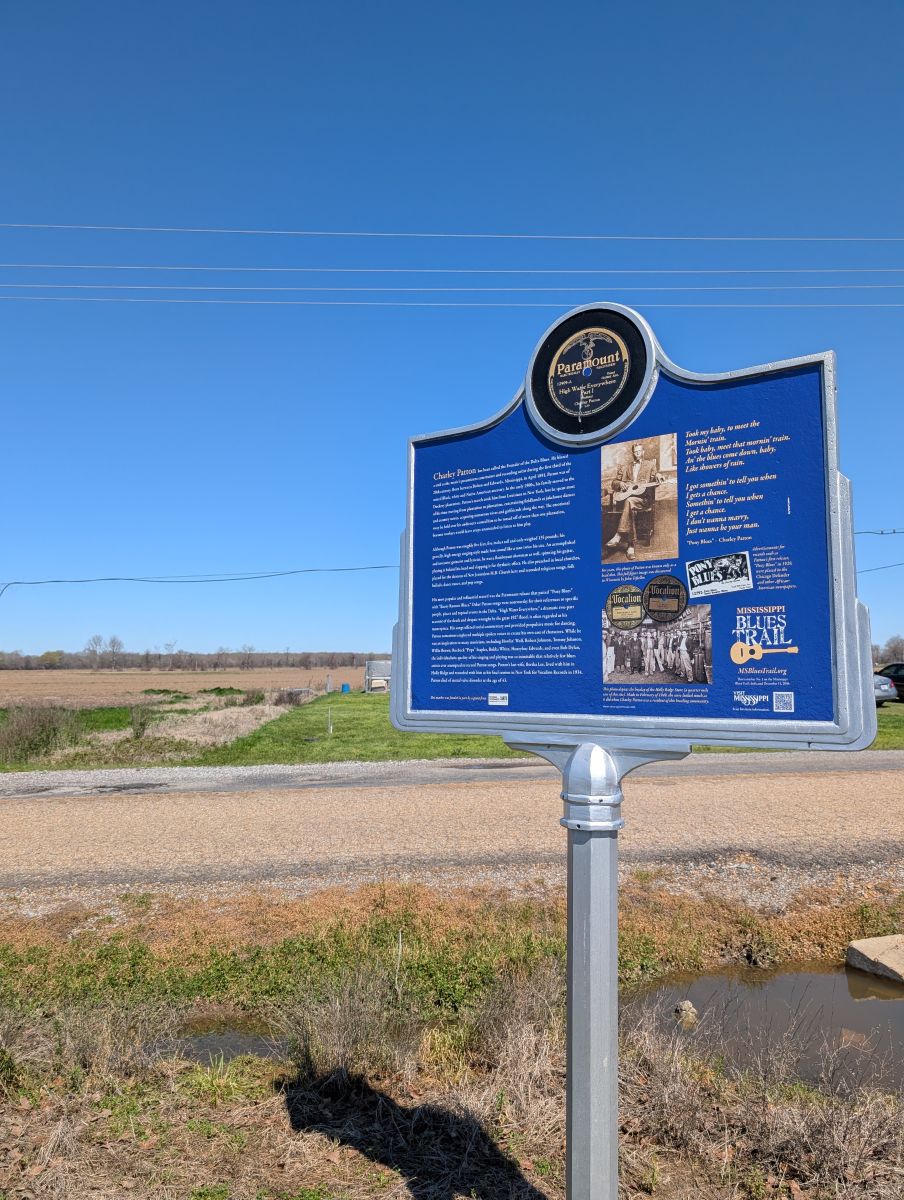
Above: Photo of Mississippi Blues Trail marker near Charley Patton's grave in Holly Ridge, Mississippi
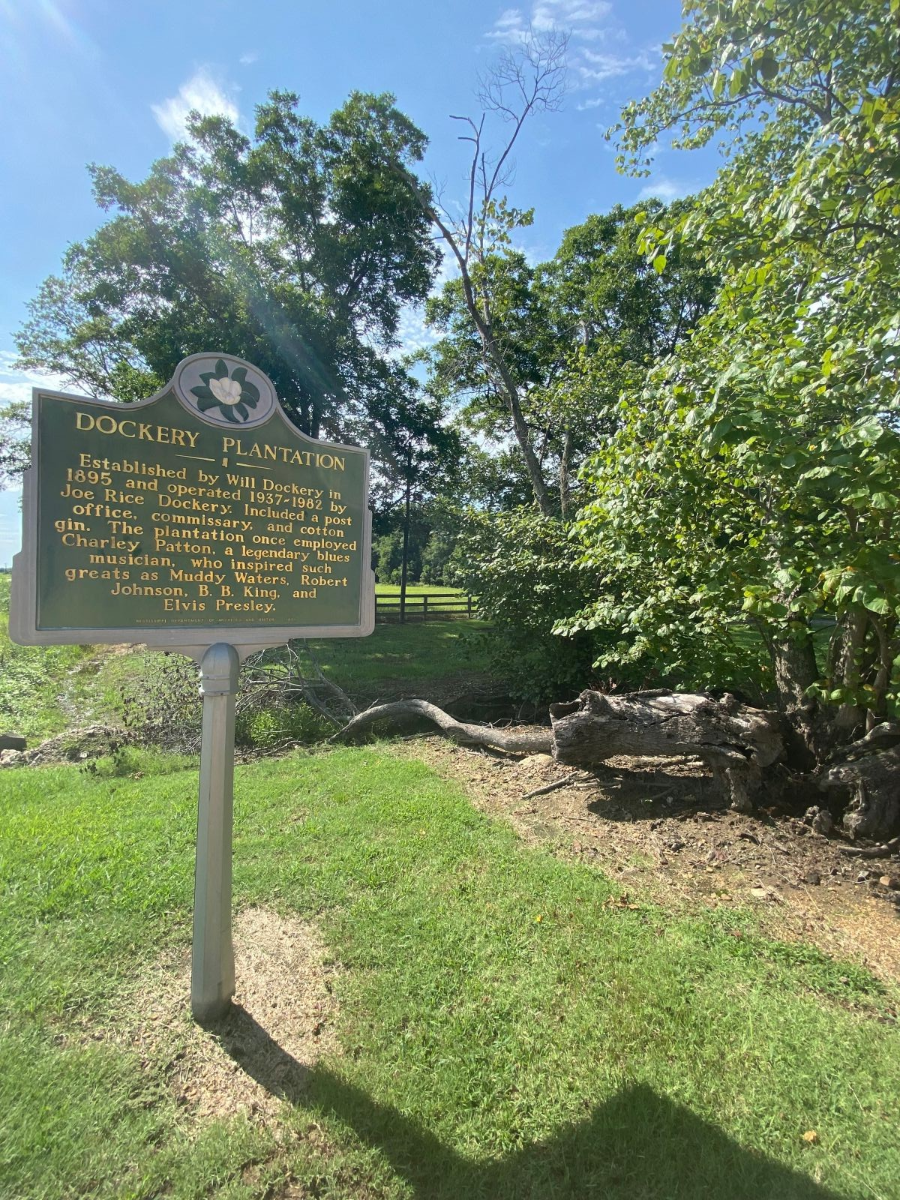
Above: Photo of historical marker about Dockery Plantation and Charley Patton
Hotels as Sites of 1927 Flood History in the Mississippi Delta
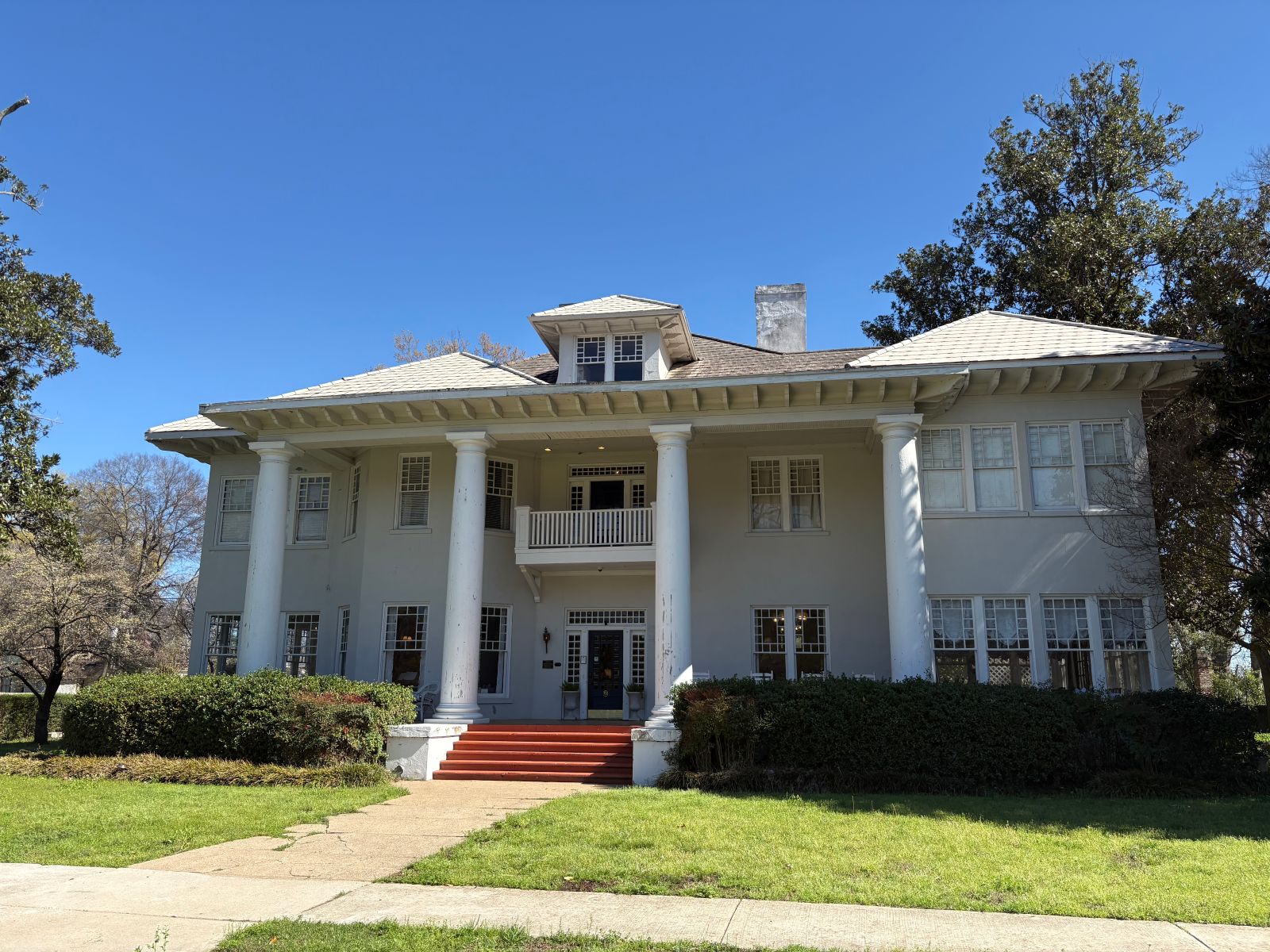
Above: The Thompson House Inn in Leland, Mississippi
Historic buildings and houses in the Mississippi Delta continue to stand to tell stories and histories about the 1927 Flood in the region. Two examples in Washington County include what is now known as Hotel 27 in Greenville and The Thompson House Inn in Leland. Learn more about their histories below:
The Thompson House
Joseph Wood Thompson was a Mississippi Delta planter and served as president of the Board of Mississippi Levee Commissioners during the 1927 flood. Floodwaters from the Mounds Landing crevasse reached the top step of the house’s exterior, which sits along Deer Creek. Today, the Thompson House operates as an inn with a restaurant and bar. Learn more: https://www.thompsonhousebb.com/about-us.
“Old Levee Board Building”/Hotel 27
The offices of the Mississippi Levee Board were at this location in downtown Greenville for over 100 years. During the 1927 flood, Secretary of Commerce Hebert Hoover visited with local officials to discuss flood relief efforts. It is now the site of Hotel 27, a historic and boutique hotel whose name commemorates the history of the Great Flood. Learn more: https://www.hotel27.org/about.html.
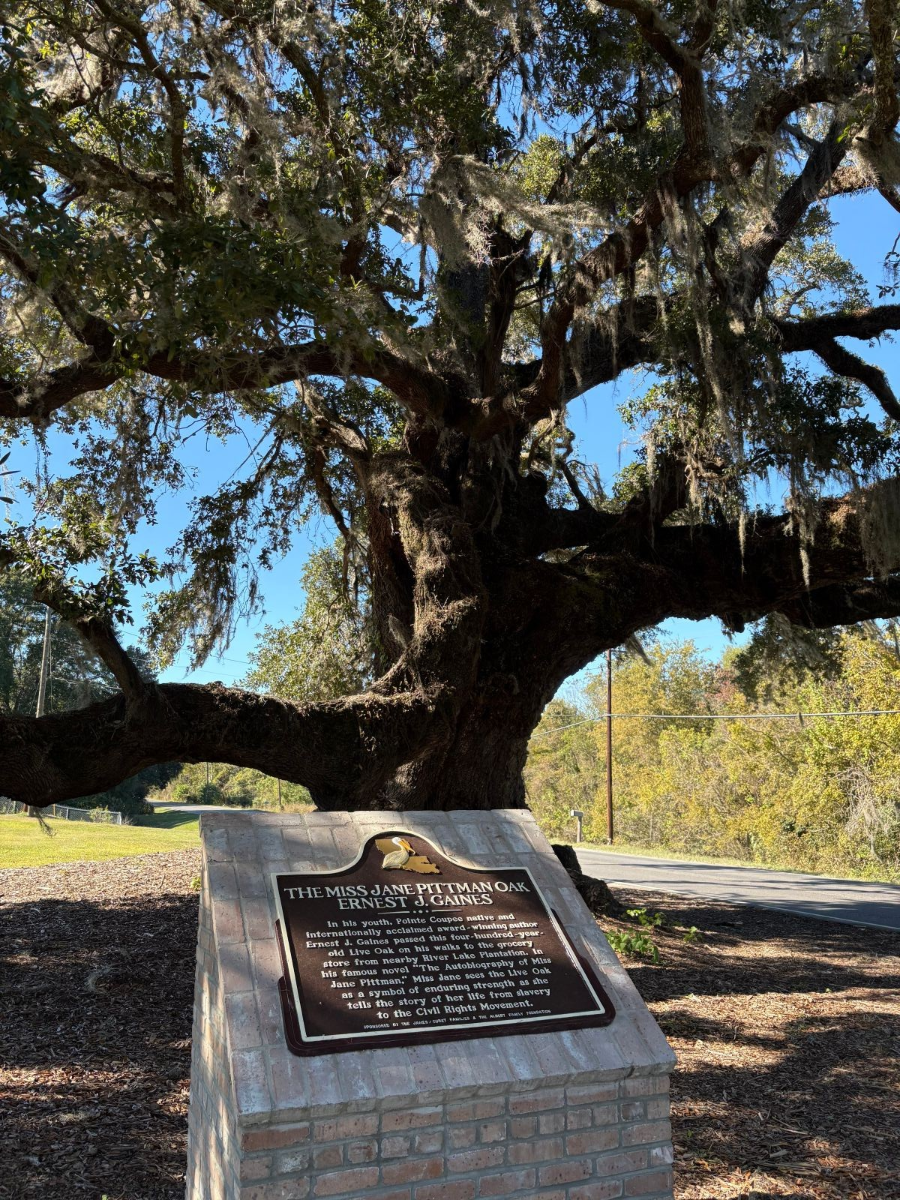
Ernest Gaines and The Miss Jane Pittman Oak in Pointe Coupee Parish (Louisiana)
Author Ernest J. Gaines (1933-2019) published The Autobiography of Miss Jane Pittman in 1971. The book references the ancient oak tree that Gaines passed by regularly while growing up on Riverlake Plantation in Pointe Coupee Parish. The book also discusses the 1927 Flood and the McCrea Crevasse in the section "Of Men and Rivers," describing the continuous rain that began in 1926 and the swelling of the Mississippi, Atchafalaya, and Red Rivers: "But after so much rain that spring even the rivers couldn't take all the water. And the water had to find somewhere else to go." [1]
In January 2026, a new historical marker was installed near the "Miss Jane Pittman Oak," replacing one that had been previously stolen. The marker reads: "Miss Jane sees the Live Oak as a symbol of enduring strength as she tells the story of her life from slavery to the Civil Rights Movement."
The tree is a historical marker and a witness to history, before and after the 1927 Flood.
[1] Ernest J. Gaines, The Autobiography of Miss Jane Pittman (Bantam, 1972), 156.
Above: "The Miss Jane Pittman Oak/Ernest J. Gaines" historical marker in Pointe Coupee Parish
Get Involved with the Great Flood Project: Programming
Are you interested in planning a program/event/exhibit/etc. as part of the Great Flood Centennial? There are many ways to be involved in programming. Here are just a few ideas that have been presented during discussions about the Centennial:
writing a poem/essay or creating art
reading a book related to the flood, Mississippi River, etc. in your book club
learning and performing a blues song that is based on the 1927 Flood or flooding
incorporating the theme of water or the flood into existing programming at a local festival or event
researching the history of a local building or event that was impacted by the 1927 Flood in your community
If you are planning a program or event related to the public humanities, consider applying for a grant! Learn more about potential funding opportunities: Get Involved – 1927 Great Flood.
Please reach out to kmccullum@lthp.org if you want to discuss your ideas and to let us know what you are planning!