If you're having trouble viewing this email, you cansee it online.
Founded in 1979, the Louisiana Trust for Historic Preservation advocates, promotes, & preserves historic places representing our diverse culture.
December 2025
Project Updates
Dedication of Inaugural Historical Marker
The Great Flood Project officially launched its historical marker program on Tuesday, December 16, 2025, in New Roads, Louisiana, in Pointe Coupee Parish. It is the first marker of many that will be placed throughout the greater Delta region, connecting sites across what will become a commemorative trail. These sites will be mapped on our Website as part of an archive that preserves the history of the 1927 Flood.
If your community is interested in investing in a historical marker, please complete the“Community Interest Form”or reach out to 1927flood@lthp.org to participate in the Great Flood Centennial program. Go to our Website to learn more about the design and features of thehistorical marker. Communities and organizations can also participate by planning programs, events, exhibits, educational activities, etc.
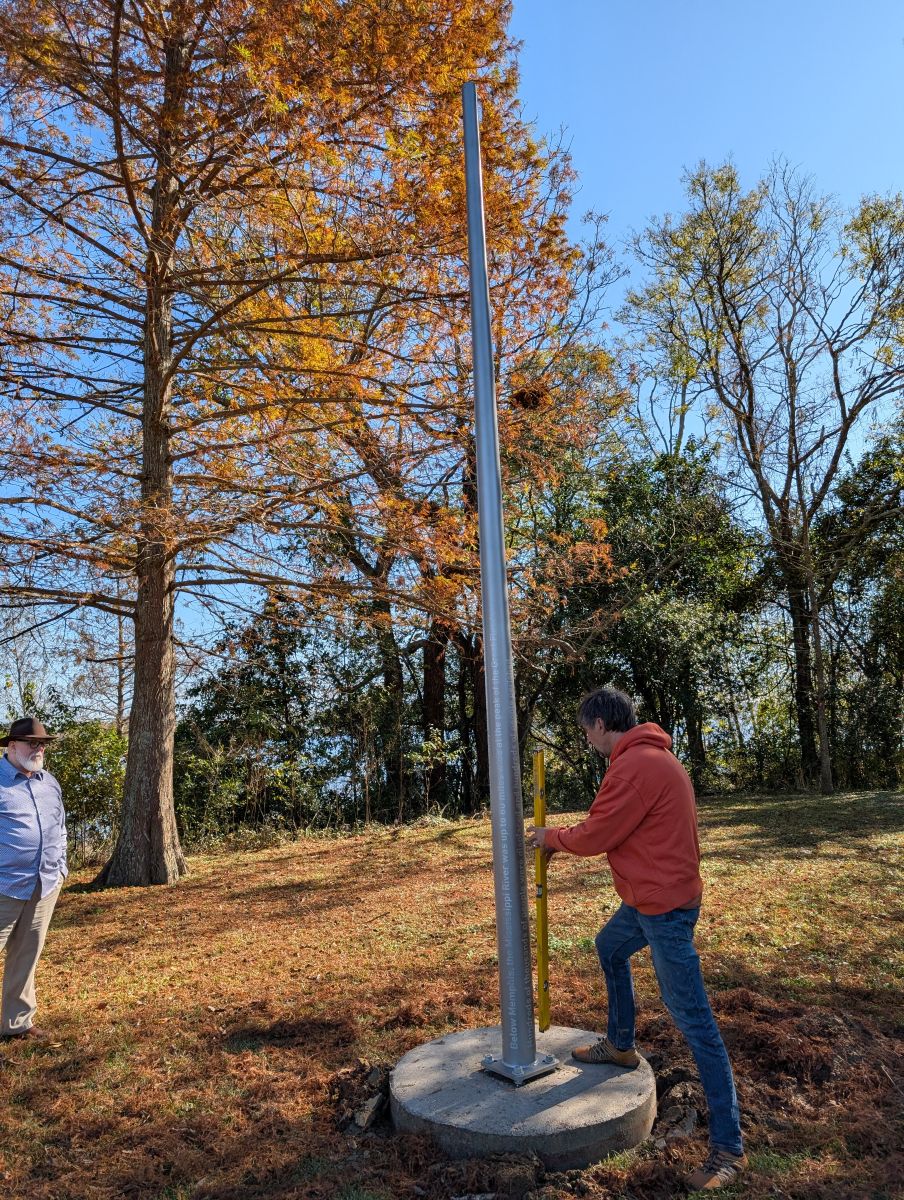
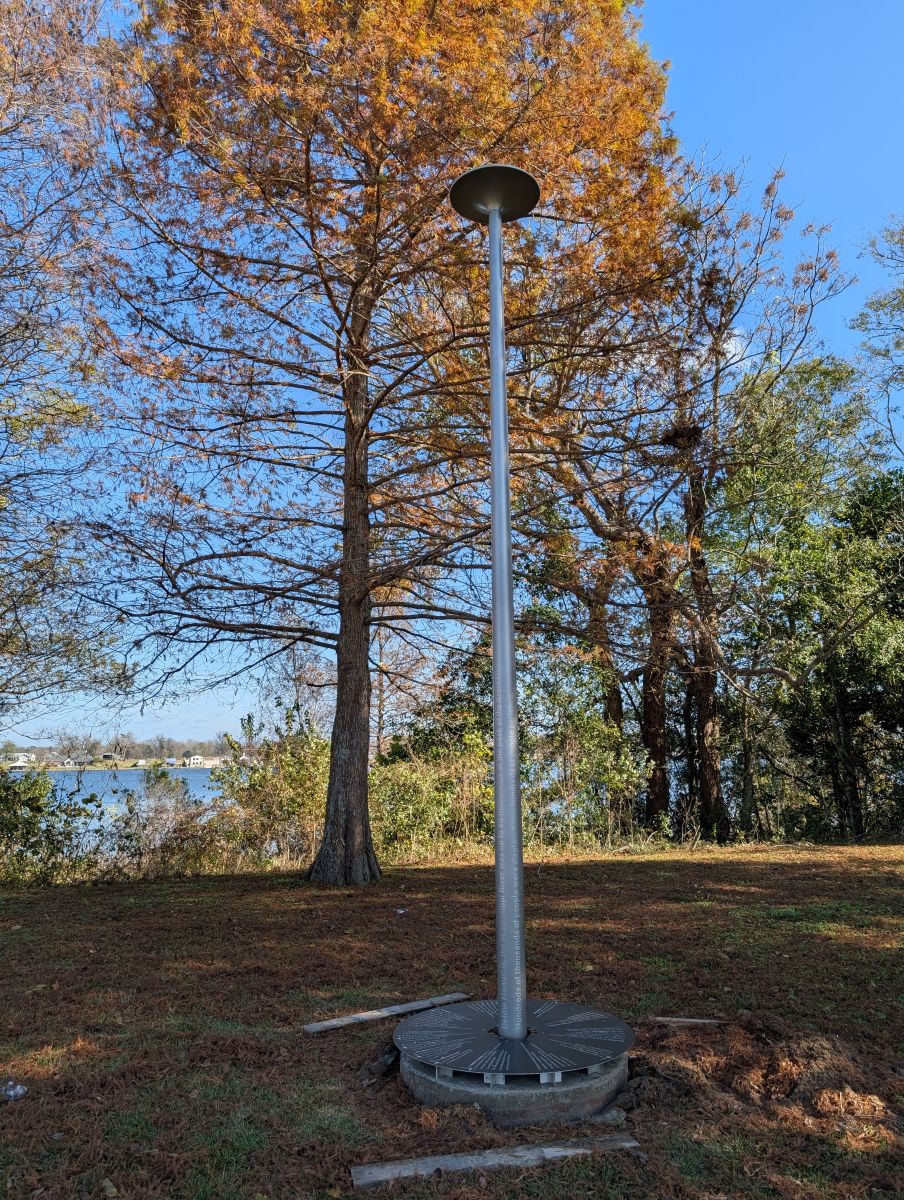
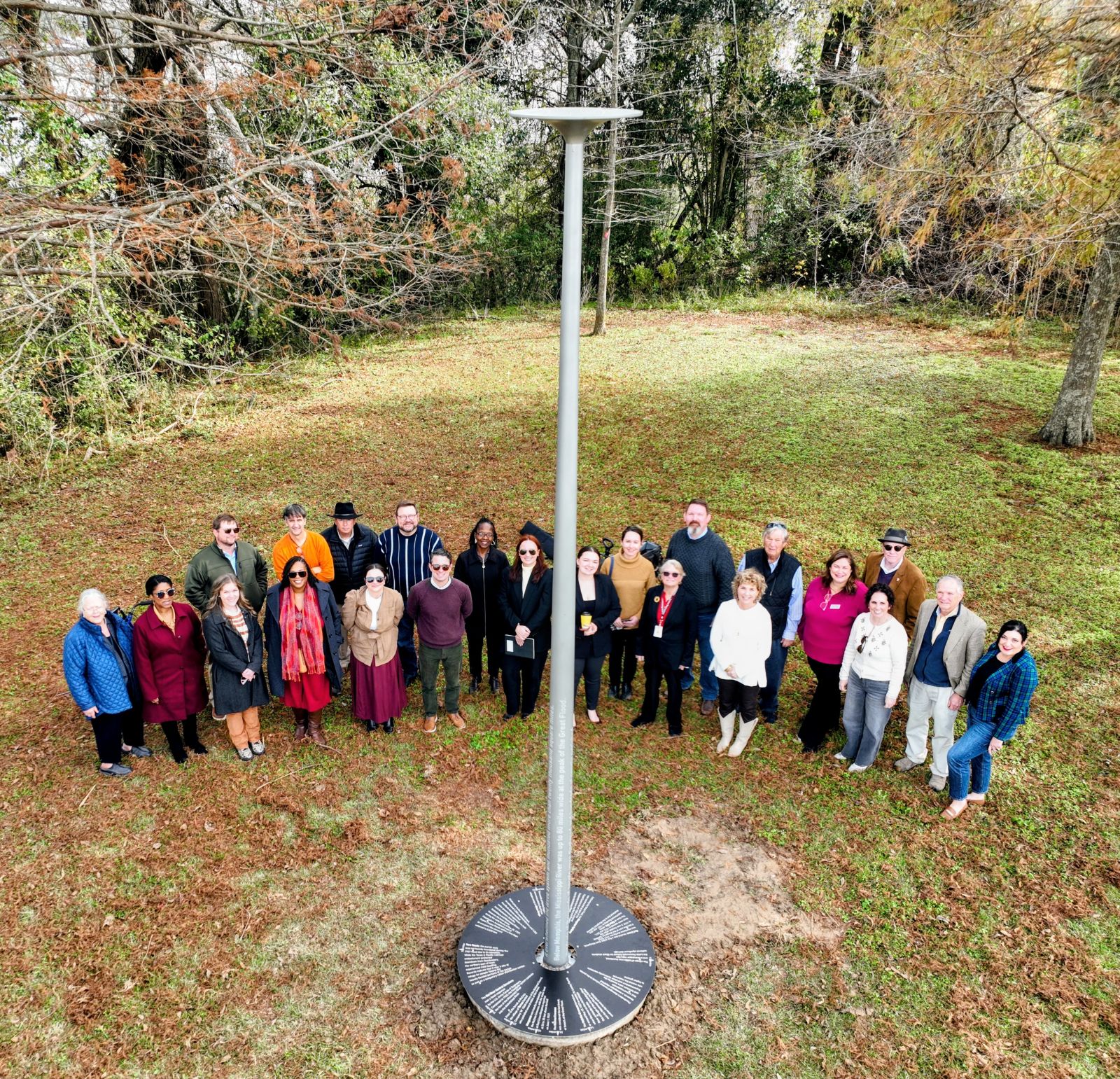
Pictured below are photos taken during the installation process and the dedication ceremony. Left: Artist Joel Breaux works on installation while Harry Portier of the Pointe Coupee Museum looks on. Right: The marker post-installation. Bottom: Attendees gather around the historical marker after the dedication ceremony.
Site Spotlight: Pointe Coupee Parish
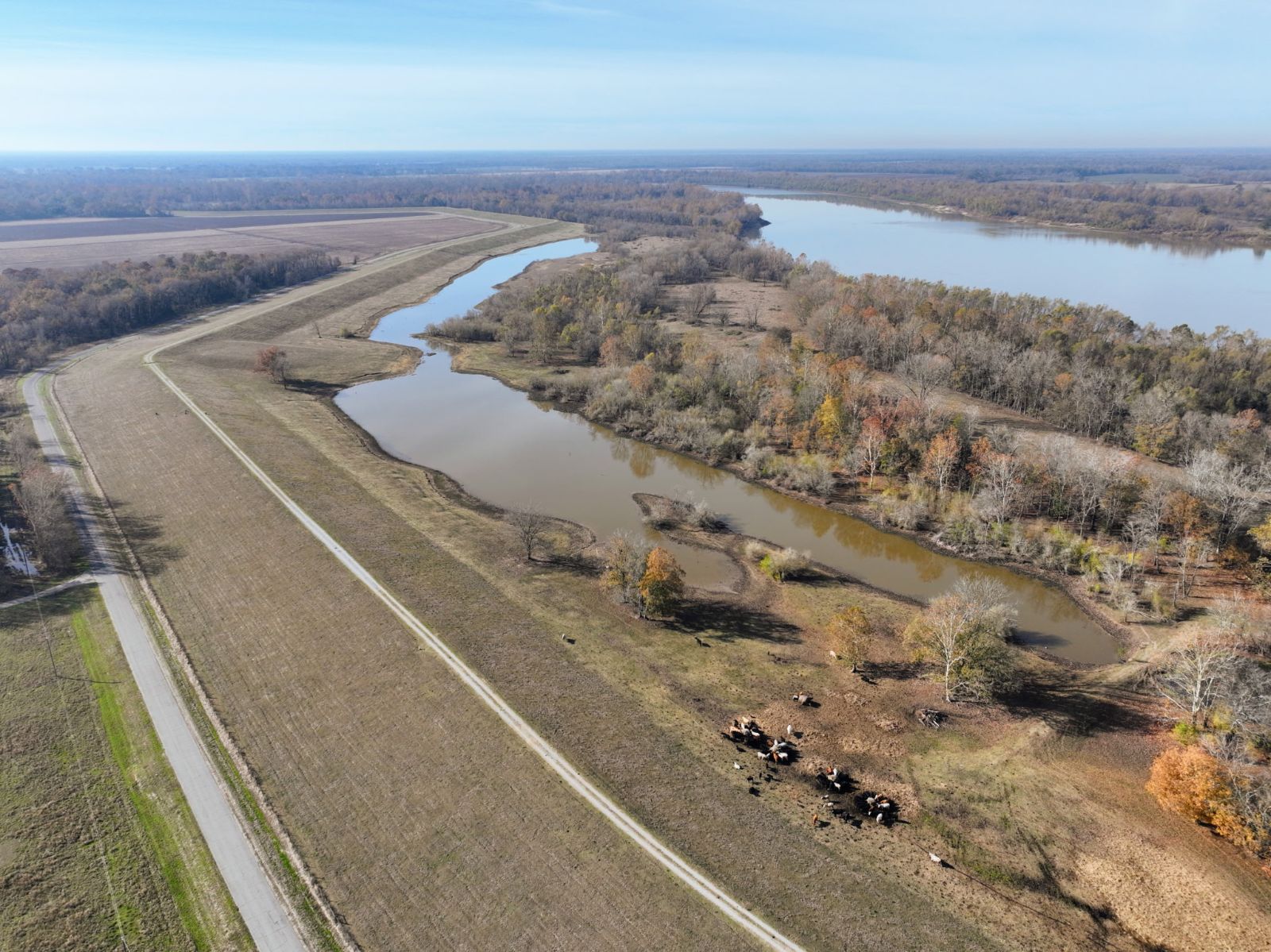
The McCrea Crevasse
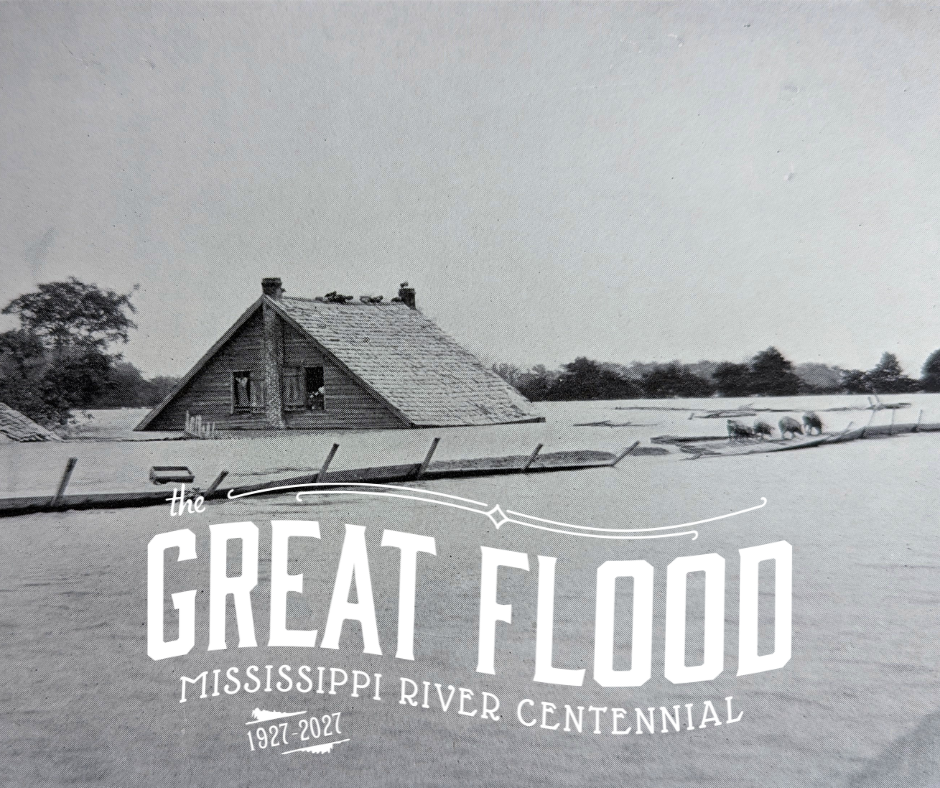
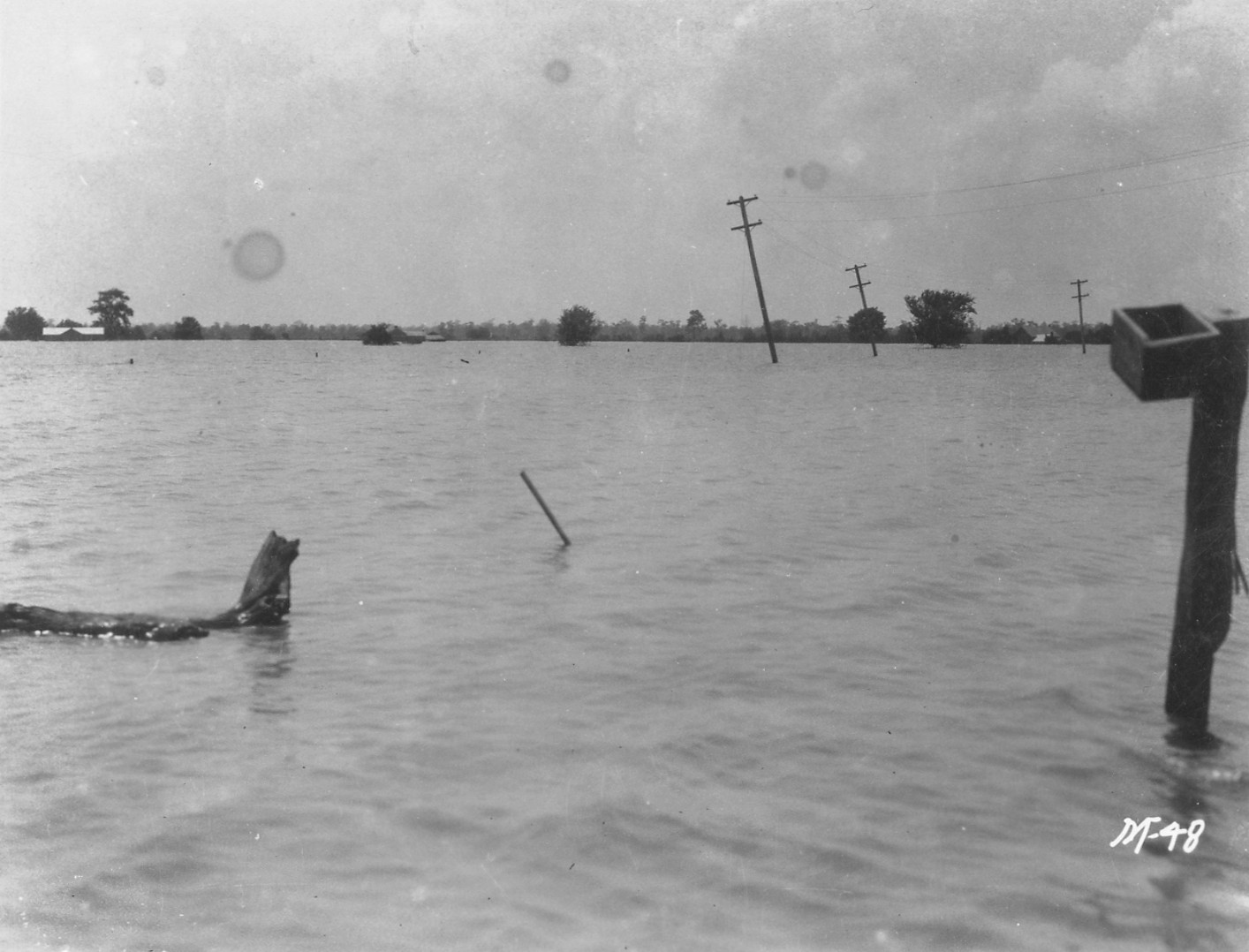
B&W photo, 1927. Flooding in Pointe Coupee Parish Louisiana. Written on photo: There are 2000 square miles like this in Pointe Coupe Parish.
The McCrea Crevasse was considered the “last break” or levee breach of the Great Flood. An estimated 1,200 convicted laborers from the state penitentiary and 1,000 free Black laborers worked for weeks under government supervision to hold back the floodwaters of the Atchafalaya and Mississippi Rivers. Newspapers reported that they were “heroes” on the McCrea levee as they battled the Atchafalaya River. After the first levee broke, the laborers constructed a barrier of sandbags that was thirty feet high and “almost as wide.” [1]The Edmonton Journal reported that there “was no room for adequate food for the convict army.” Laborers ate stale bread while working four-hour shifts [2] to hold back the flood that “threatened to inundate parts of six parishes inhabited by 50,000 persons.” [3]
However, the levee finally broke during the early hours of Tuesday, May 24, 1927. Initially, the break was more than 1,000 feet wide, extending more than twenty miles south, inundating around one hundred and fifty square miles. [4] By May 28, the break had widened to 2,000 feet and covered more than 230 square miles of “fertile cane lands” in Pointe Coupee Parish. [5]
Prior to the break, thousands of residents in the region fled. On May 26, a newspaper reported that hundreds of people in the "upper tip" of Pointe Coupee Parish were marooned by backwaters. Even though many residents refused to leave, hundreds took the last train operated by the Texas & Pacific Railroad out, while others were evacuated by boat to refugee camps in Baton Rouge. [6]
By June 1, the crevasse had widened to 2,600 feet but was not spilling as much water into the “sugar bowl” as it had done in the first few days. [7] A special flood bulletin reported that "upper Pointe Coupee Parish will not show further rise." [8]
You can learn more about the McCrea Crevasse by engaging with the Interactive Map on the Great Flood Website here.
Pictured above is a photo taken at McCrea by Brian Davis in December 2025.
[1]“Twelve Hundred Convicts Aid in Preventing Break in Levee," York News-Times (York, Nebraska), May 23, 1927, p. 1; and "1,200 Convicts Prove Heroes on Levee Top," Edmonton Journal (Edmonton, Alberta, Canada), May 23, 1927, p. 1.
[2] "1,200 Convicts Prove Heroes on Levee Top," Edmonton Journal (Edmonton, Alberta, Canada), May 23, 1927, p. 1.
[3] “1,200 Convicts Stem Deluge Against 50,000 Lives,” The Indianapolis Times (Indianapolis, Indiana), May 23, 1927, p. 2.
[4] “Many Refuse to Leave Homes in Path of Waters,” Leader-Telegram (Eau Claire, Wisconsin), May 26, 1927, p. 1.
[5] “Break is Widened,” The Atlanta Constitution (Atlanta, Georgia), May 28, 1927, p. 6.
[6] "Hundreds, Deaf to Warnings, are Trapped by Flood," The Tennessean (Nashville, Tennessee), May 27, 1927, p. 1.
[7] “Relief for Sections of Sugar Bowl Seen,” The Stockman's Journal (Omaha, Nebraska), June 1, 1927, p. 1.
[8] "Special Flood Bulletin," The Daily Review (Morgan City, Louisiana), June 1, 1927, p. 1.
The Texas & Pacific Railroad and the Great Flood
The Texas & Pacific Railroad played a significant role during the 1927 Flood as well as flooding events that preceded the disaster. In 1912, when the levee at Torras broke in Pointe Coupee Parish, many residents ran toward the railroad embankment to seek higher ground. The Pointe Coupee Banner reported that a freight train at the depot carried "200 to 300" people "further down the line" while others stayed behind and camped along the railroad tracks. [1]
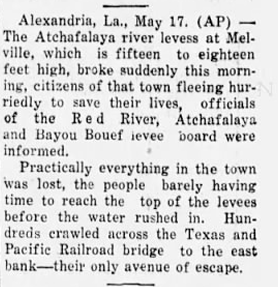
Similarly, in 1927, the Texas & Pacific railroad embankment protected New Roads (the parish seat of Pointe Coupee Parish) from experiencing significant flooding in its downtown. In Melville, a high railroad embankment was believed to have provided safety to residents by blocking the rush of floodwaters from the Melville Crevasse. [2]
Additionally, relief trains used the Texas & Pacific during the 1927 Flood to provide residents transport out of flooded areas. [3] The railroad was also often a physical marker of the depth of the floodwaters. For example, on May 18, the New Orleans weather bureau reported that water was running "one foot deep over the Texas and Pacific railroad tracks" [4] at Palmetto and Morrow, Louisiana in St. Landry Parish.
Pictured above is a clipping from The Crowley Post-Signal (Crowley, Louisiana), May 17, 1927, p. 4.
[1] "Torras Levee Breaks; Residents Unprepared," Pointe Coupee Banner (New Roads, Louisiana), May 4, 1912, p. 1.
[2] "Flee from High Water in Nighties," The Independent-Record (Helena, Montana), May 18, 1927, p. 2.
[3] "Small Town is Almost Lost in Water," The Bradenton Herald (Bradenton, Florida), May 17, 1927, p. 1.
[4] "Flee from High Water in Nighties," The Independent-Record (Helena, Montana), May 18, 1927, p. 2.
Get Involved with the Great Flood Project
There are several ways you can become involved with the Great Flood centennial. One way is to invest in a historical marker for your community that will share facts and stories about the 1927 flood in your area. The cost for fabrication and installation of the marker is approximately $10,000. We encourage communities to fundraise for the marker or seek sponsorship through a community business or corporation.
Another way to become part of the project is to plan/host an event, program, exhibit, etc. Be as creative as you would like! Here are examples of various programming you can plan:
Finally, you can share your family's or community’s stories. Do you have documents, photographs, or oral histories related to the flood?
If you want to reach out or become part of the Great Flood centennial program, please email kmccullum@lthp.org. If you haven’t already, consider becoming a member of the Louisiana Trust for Historic Preservation and follow us on social media for updates.
Power Preservation 2025
The Louisiana Trust for Historic Preservation is grateful for your support in helping us Power Preservation in our mission to advocate for and preserve Louisiana's historic places in all 64 parishes. An end-of-year gift allows us to keep this work going. Please consider giving todayand making an impact. Learn more about Power Preservation 2025 here.