If you're having trouble viewing this email, you cansee it online.
Founded in 1979, the Louisiana Trust for Historic Preservation advocates, promotes, & preserves historic places representing our diverse culture.
November 2025
Project Updates
The Website
The Great Flood Project is excited to launch our updated website! The website’s primary feature is the “Archive,” a dynamic and collaborative page that will display the various ways communities are commemorating the centennial of the 1927 flood. A story map displays communities who are planning programs/events, sites where historical markers will be installed, and primary sources shared by individuals and organizations. Communities and organizations who wish to participate in the centennial can complete the“Community Interest Form”to take part in this broader effort of preserving this important history. The archive will also feature short stories about events, people, places, etc. related to the flood, featuring primary sources that help to tell the story. Over time, more stories will be added as the archive continues to grow and expand.
We are also excited to present amapthat, through using GIS and recorded river gauge heights from the Great Flood, provides visitors an estimated depth of the floodwaters in any given community/area that was impacted by the 1927 flood. This map is adapted from the Library of Congress’s “Mississippi River Flood of 1927” map that shows locations of Red Cross camps and levees.
Finally, the website also provides more information about the design and features of thehistorical marker.
The Historical Marker
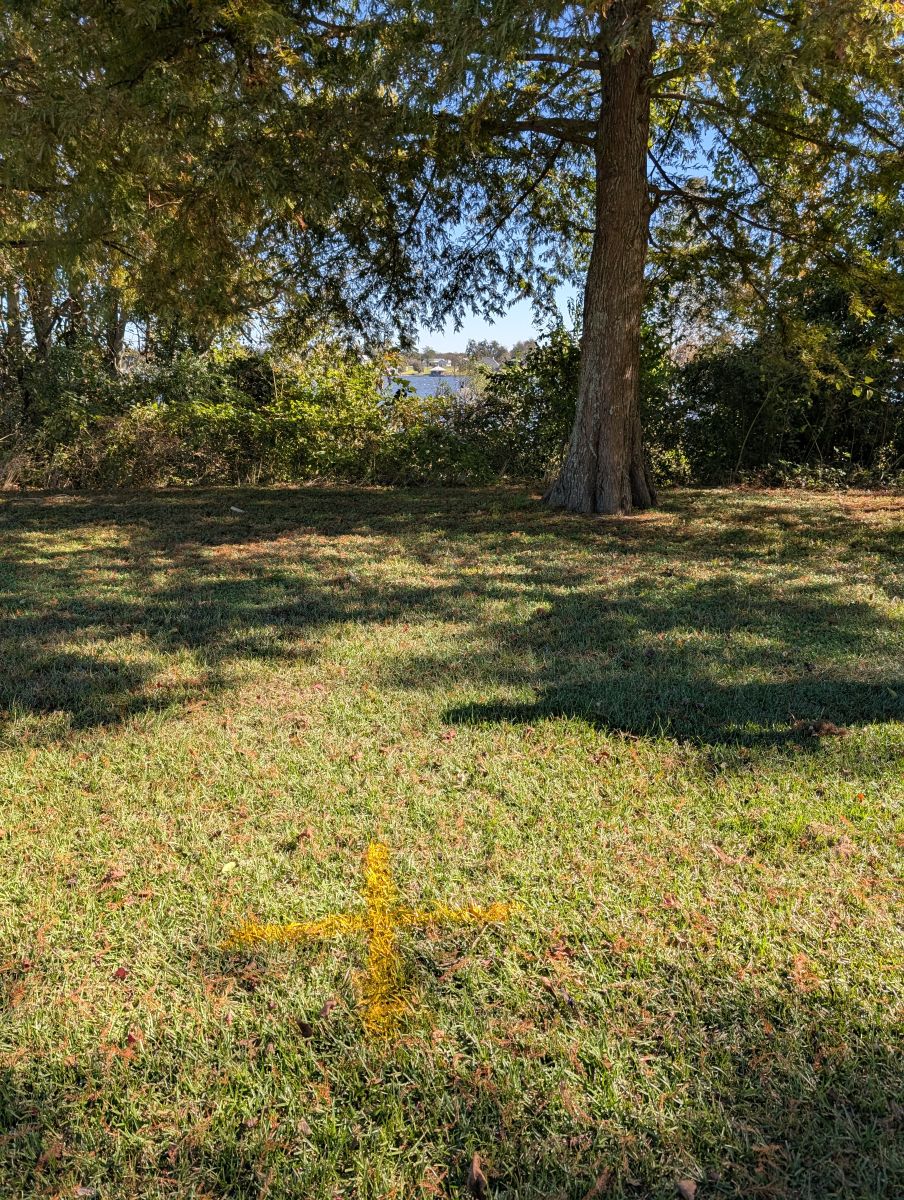
The first historical marker is getting closer to being installed in New Roads, Louisiana. This past week, the concrete was poured for the foundation of the marker. The marker will be installed within the next couple weeks. The dedication and ribbon-cutting ceremony will be held Tuesday, December 16th, at 1 p.m. at the Pointe Coupee Museum. It is the first marker site to be mapped in the Archive.
Your community could be next! Please consider investing in or donating/sponsoring a historical marker to commemorate the flood’s impact and history in your area. Please reach out to 1927flood@lthp.org with any questions or for more information, or complete the “Community Interest Form” to indicate your interest in participating in the Great Flood Project.
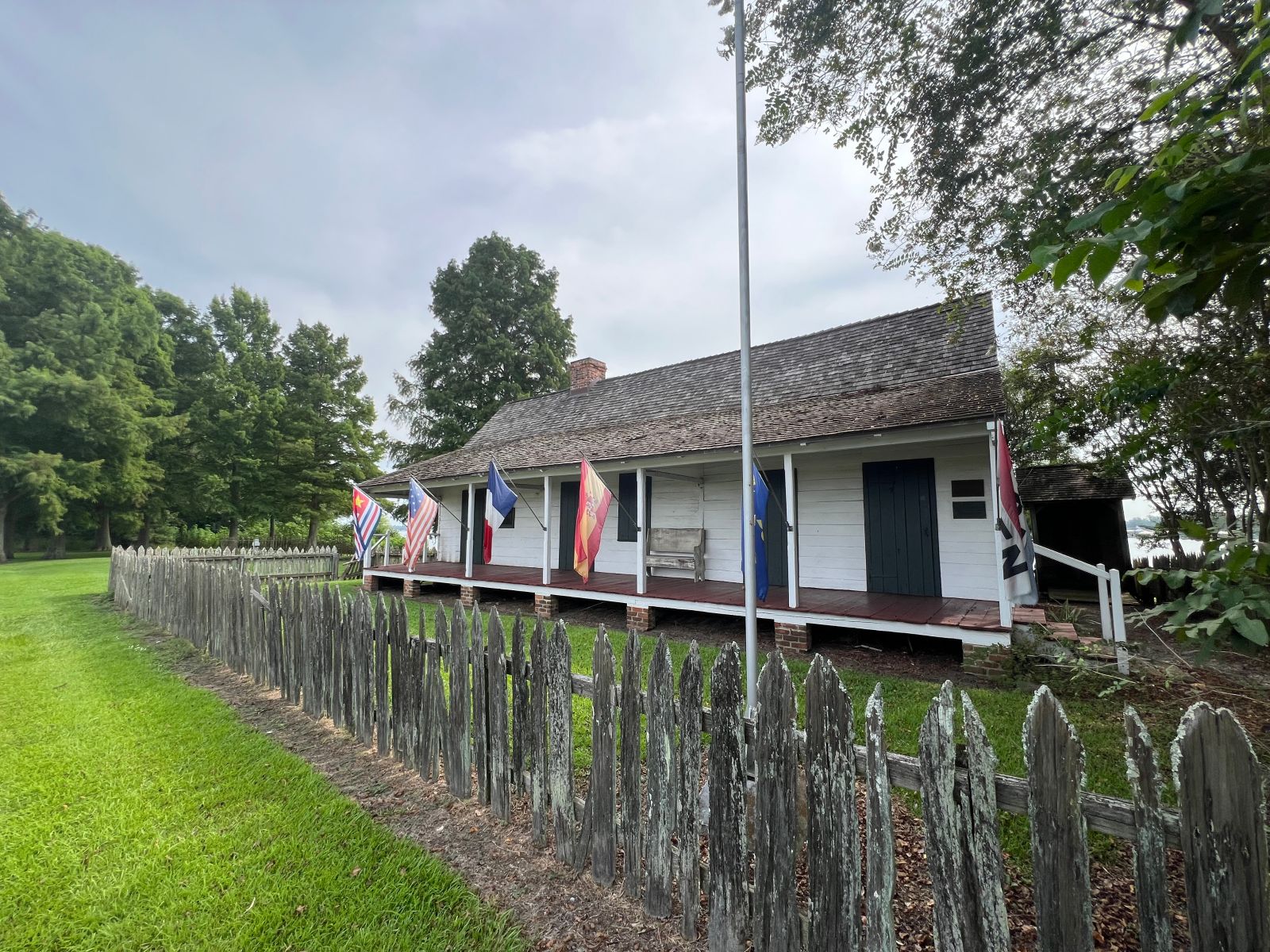
Pictured below are photos taken at the museum in preparation for the marker's installation.
Pointe Coupee Museum
8348 False River Road
New Roads, LA 70760
Site Spotlight: Pointe Coupee Parish
A Sample of Stories about Torras during the 1927 Flood
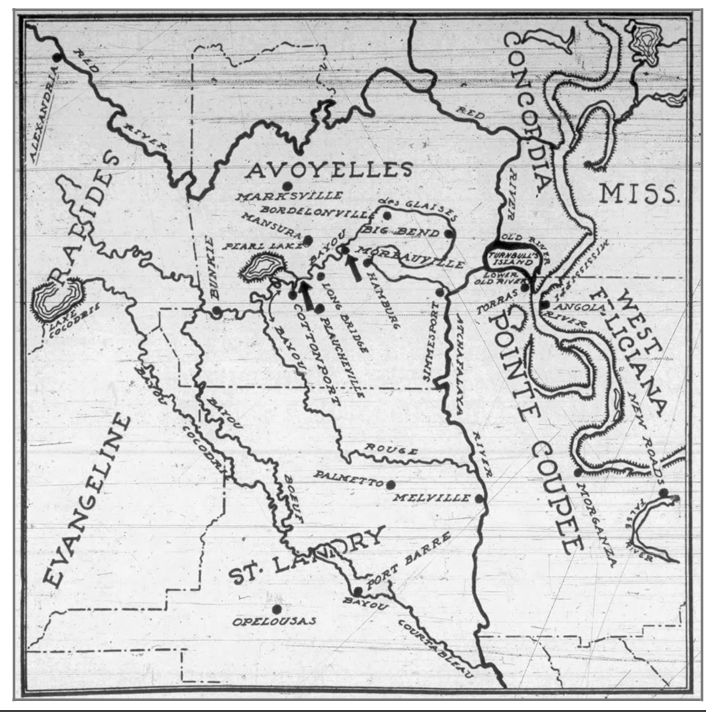
Pictured above is a map that shows Pointe Coupee Parish and Torras.
Source: The Times-Picayune (New Orleans, Louisiana), May 14, 1927, p. 3. (Newspapers.com)
Before the Great Flood of 1927, the town of Torras previously witnessed widespread destruction and devastation during the Mississippi River flood of 1912. A New Orleans newspaper reported on May 13, 1912, that water from the Torras Crevasse could be seen from the capitol building in Baton Rouge.[1]
Fifteen years later, Torras became an important site during the 1927 flood. Company “M” 156th Infantry of the National Guard was stationed along the levee at the Old River in May. One local newspaper reported that a refugee camp was also to be stationed at Torras, which would require more men from Lafayette to be recruited for the unit. [2] The unit was led by Captain Alfred J. Moss, who regularly appealed to local newspapers for supplies such as magazines and books for the men to enjoy while they were not on duty. Moss described the conditions of the camp and noted that there was a tent that served as both a mess hall and a Y.M.C.A., depending on the occasion. [3]
On May 13, the Torras levee was weakened by heavy rain and floodwaters. The Old River had risen six inches during the night and a “desperate fight was being waged to save the levees there.” As of May 14, the Torras levee had been strengthened and was considered in good shape, according to the chief state engineer. [4]
On May 18, the Shreveport Journal reported that then-Secretary of Commerce Herbert Hoover reviewed the coast guard and rescue boats at Torras near the mouth of the Old River. [5] On May 26, a newspaper announced that 49 men from Company M would be moved to Lafayette. [6] On May 29, a few days following the McCrea Crevasse, The Times-Picayune noted that several hundred people planned to camp on the Torras levee rather than be evacuated to Baton Rouge, where Red Cross camps had been established. [7]
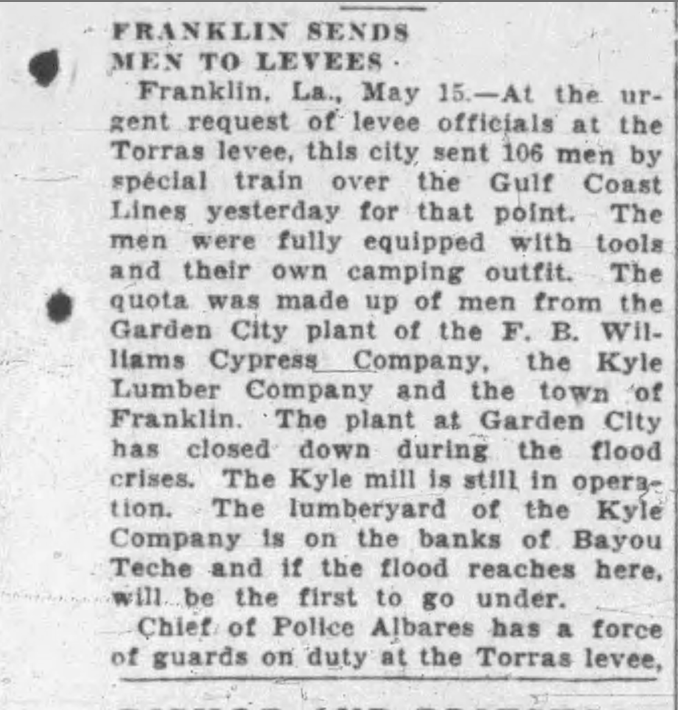
Pictured above is a newspaper clipping from Franklin, Louisiana, describing how the city sent 106 men to help strengthen the levee at Torras.
Source: The Times-Picayune (New Orleans, Louisiana), May 16, 1927, p. 3. (Newspapers.com)
[1]“Torras Flood Can Be Seen from Statehouse at Baton Rouge,” The Times-Democrat (New Orleans, Louisiana), May 13, 1912, p. 2.
[2] “Lend a Hand,” The Daily Advertiser (Lafayette, Louisiana), May 5, 1927, p. 4.
[3] “More Men Enlisted in Co. ‘M’; Captain Moss Urges Books, Magazines for Camp at Torras,” The Daily Advertiser (Lafayette, Louisiana), May 9, 1927, p. 1.
[4] “Torras Situation Improves,” The Crowley Post-Signal (Crowley, Louisiana), May 14, 1927, p. 1.
[5] “Twenty Parishes Affected,” The Shreveport Journal (Shreveport, Louisiana), May 18, 1927, p. 5.
[6] “Captain Moss and 49 Men of Co ‘M’ Due Here Tonight,” The Daily Advertiser (Lafayette, Louisiana), May 26, 1927, p. 1.
[7] “Many Refugees Decide to Camp on Torras Levee,” The Times-Picayune (New Orleans, Louisiana), May 29, 1927, p. 1.
The Man Who Wrote About the Flood: Richard Wright's Blues Literature
Richard Wright was born near Natchez, Mississippi in 1908 and spent time growing up in Memphis, Tennessee, and Arkansas before migrating to Chicago in 1927. His literary works and autobiographical Black Boy (1945)illustrated themes related to his lived experiences as a Black southerner during the Jim Crow era. Wright’s writing incorporated the blues aesthetic and tradition, telling stories that, like the blues, are not “intrinsically pessimistic” but that also exude hope and self-determination. [1] The blues as a genre and literary tradition also served as a counter-narrative to dominant narratives, reflecting the perspectives and lived experiences of Black southerners. These counter-narratives also spoke to Black southerners’ relationships to the land and environmental disaster. [2]
Wright wrote about floods through a blues lens in his short stories “The Man Who Saw the Flood” and “Down by the Riverside.” The stories were published or reprinted a decade after the 1927 Mississippi River flood. [3] While national newspapers typically reported on the 1927 flood in more neutral and less critical tones, Wright’s short stories demonstrated that environmental disasters are not “neutral,” despite the fact that mainstream reporting during the time period did not often highlight the disproportionate impact of disaster on Black and poor southerners.[4]
In “The Man Who Saw the Flood,” Wright tells the story of a Black sharecropper named Tom who returns with his family to their cabin, which is covered in sticky mud after the floodwaters receded. They have lost most of their belongings and animals. Tom owes money to the white landlord who owns the land. Tom learns that other sharecroppers indebted to the landlord had tried to leave and had been “picked up by the sheriff.” [5]Tom decides that it is too dangerous for his family to try and leave the Jim Crow South—they would remain on the land and would continue to be held by the peonage system of sharecropping. In the end, Tom makes the decision of survival, ensuring that his family does not go hungry.
Even though “The Man Who Saw the Flood” was a work of fiction, Wright’s story highlighted the harsh realities of the sharecropping system as well as racial disparities and violence in the Deep South during and after the Great Flood.
“When the flood waters recede,
the poor folk along the river
start from scratch.” [6]
[1] Richard Wright, “The Blueprint for Negro Writing,” in The Norton Anthology of African American Literature, eds. Henry Louis Gates, Jr., and Nellie Y. McKay (W.W. Norton & Company, Inc., 1997), 18-19.
[2] Richard M. Mizelle, Backwater Blues: The Mississippi Flood of 1927 in the African American Imagination (University of Minnesota Press, 2014).
[3] Note that “The Man Who Saw the Flood” was previously titled “Silt.” See William Howard, “Richard Wright’s Flood Stories and the Great Mississippi River Flood of 1927: Social and Historical Backgrounds,” The Southern Literary Journal 16, no. 2 (1984), 44-62.
[4] See Catherine D. Gooch, “Death by the Riverside: Richard Wright’s Pastoral and the Mississippi Flood of 1927,” Interdisciplinary Studies in Literature and Environment 28.4 (2021), 1614-1633.
[5] Howard, "Richard Wright's Flood Stories and the Great Mississippi River Flood of 1927," 53.
[6] Richard Wright, “The Man Who Saw the Flood,” in Eight Men (Harper Perennial Modern Classics, 1960), 102.
Get Involved with the Great Flood Project
There are several ways you can become involved with the Great Flood centennial. One way is to invest in a historical marker for your community that will share facts and stories about the 1927 flood in your area. The cost for fabrication and installation of the marker is approximately $10,000. We encourage communities to fundraise for the marker or seek sponsorship through a community business or corporation.
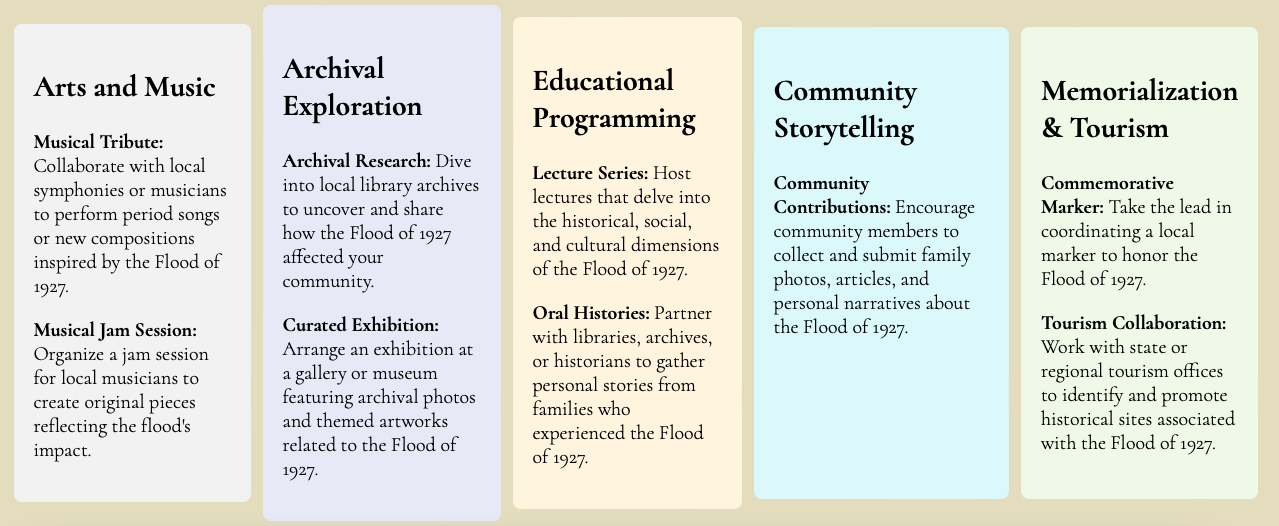
Another way to become part of the project is to plan/host an event, program, exhibit, etc. Be as creative as you would like! Here are examples of various programming you can plan:
Finally, you can share your family's or community’s stories. Do you have documents, photographs, or oral histories related to the flood?
If you want to reach out or become part of the Great Flood centennial program, please email kmccullum@lthp.org. If you haven’t already, consider becoming a member of the Louisiana Trust for Historic Preservation and follow us on social media for updates.